
Owning a home with a fireplace in Fort Bend County comes with more responsibility than most homeowners initially expect. Beyond the warmth and comfort a well-maintained hearth provides, local codes, fire safety standards, and environmental ordinances all have something to say about how chimneys and fireplaces must be maintained, inspected, and serviced. Whether dealing with a traditional wood-burning system, a gas fireplace, or a wood stove, understanding the regulatory landscape is essential — and so is working with a trusted chimney sweep to keep everything running safely and within compliance.
Top Hat Chimney And Roofing has been at the center of these conversations for years, helping homeowners across Fort Bend County navigate the rules, schedule their annual chimney inspection, and address issues like creosote buildup removal before they become fire hazards. This article breaks down what homeowners need to know about fireplace and chimney regulations in this region — and why proactive maintenance matters more than most people realize.
Why Chimney Regulations Matter for Fort Bend County Homeowners
Fort Bend County sits within a region where the Texas Commission on Environmental Quality (TCEQ) plays a significant role in air quality enforcement. Burning wood in residential fireplaces can contribute to particulate matter in the air, particularly during certain atmospheric conditions. While Fort Bend County does not currently enforce mandatory Burn Bans at the same frequency as some surrounding counties, conditions can change rapidly — especially during dry weather months — and homeowners are expected to stay informed.
Beyond environmental compliance, local fire codes in municipalities like Sugar Land, Missouri City, and Richmond require that fireplaces and chimneys meet minimum safety standards. A chimney that hasn’t been swept in years, or one with structural damage, can pose serious risks. This is where routine chimney sweep services come into play — not just as a convenience, but as an obligation under many local codes.
Top Hat Chimney And Roofing works closely with homeowners to ensure their systems meet applicable standards, providing certified chimney cleaner services, smoke vent cleaning, and thorough inspections that document the condition of every component from the firebox to the flue cap.
Key Chimney Sweep Requirements and Local Fire Code Essentials
The National Fire Protection Association (NFPA) Standard 211 is widely referenced by Texas municipalities and serves as the backbone of most residential chimney regulations. It requires that chimneys, fireplaces, and venting systems be inspected at least once per year — and more frequently if the fireplace sees heavy use. This recommendation has been adopted as a formal requirement in many jurisdictions, meaning that skipping your annual chimney inspection isn’t just risky, it may put a homeowner in violation of local ordinances.
Here is a breakdown of the most relevant regulatory touchpoints for Fort Bend County residents:
Annual Inspection Obligation: Per NFPA 211, all chimneys and venting systems should be inspected annually regardless of usage frequency. This applies to wood-burning fireplaces, gas fireplace sweep systems, and wood stove setups alike. Top Hat Chimney And Roofing performs these assessments with certified professionals trained to identify structural deterioration, blockages, and dangerous creosote buildup.
Creosote Removal Standards: Creosote is a naturally occurring byproduct of wood combustion. When it accumulates inside the chimney flue at levels exceeding one-eighth of an inch, it becomes a fire hazard. Local fire codes, along with NFPA guidelines, mandate its removal. Soot removal in Fort Bend County is a core service offered by Top Hat Chimney And Roofing, and certified technicians use industry-approved methods to safely eliminate creosote buildup removal at all stages — from light deposits to the hardened, glazed third-degree accumulation.
Wood Stove Installation and Clearance Requirements: If a homeowner is adding or upgrading a wood stove, Texas building codes govern minimum clearances from combustible materials, proper hearth extensions, and approved venting configurations. A certified chimney cleaner from Top Hat Chimney And Roofing can assess whether an existing or planned installation meets these standards.
Gas Fireplace Compliance: Gas fireplace sweep services address a different set of concerns than wood-burning systems, but they are no less important. Venting must be intact, carbon monoxide cannot be allowed to accumulate, and the gas supply lines must be properly sealed and free from corrosion. Annual inspections ensure these systems remain safe and code-compliant.
Chimney Caps and Spark Arrestors: Many Texas municipalities require chimney caps to prevent sparks from escaping during burning — a crucial detail in fire-prone conditions. The absence of a cap or spark arrestor may violate local fire ordinances and can accelerate moisture damage inside the flue.
Understanding the Chimney Flue and the Role of a Professional Chimney Sweep in Compliance
The chimney flue is the interior channel through which combustion gases escape your home. It is lined — typically with clay tile, cast-in-place materials, or stainless steel — and that lining is what stands between a normal fire and a catastrophic chimney fire. Regulations in Texas and across the country are very specific about flue liner integrity, and for good reason.
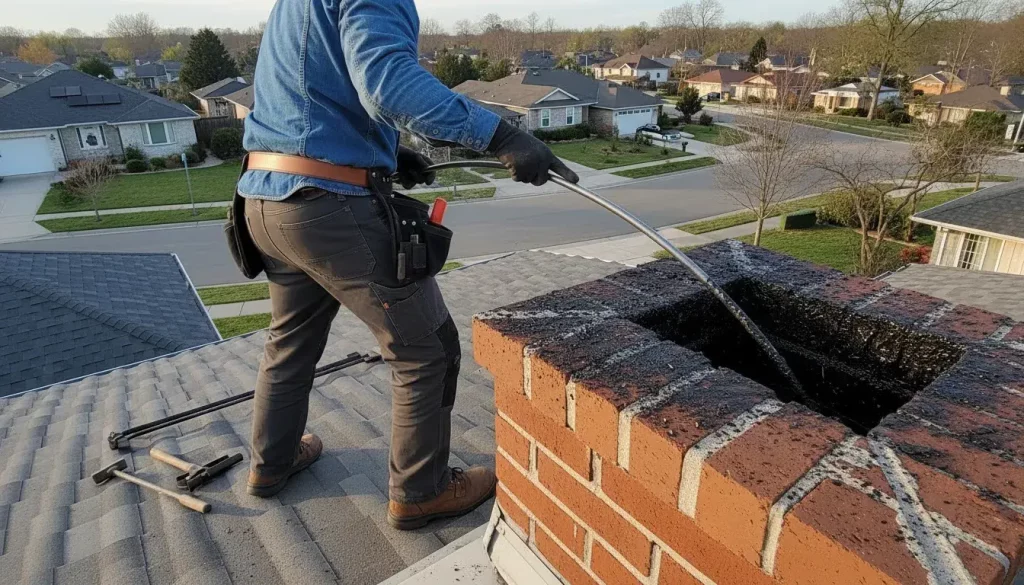
When a flue liner is cracked, missing sections, or eroded by years of heat and acidic byproduct exposure, dangerous gases including carbon monoxide can seep into living spaces. A proper chimney flue sweep doesn’t just clean the interior — it includes a visual or camera-assisted inspection of the liner itself. Top Hat Chimney And Roofing uses video scanning technology on many inspections to give homeowners definitive documentation of their flue’s condition.
This level of detail is important not just for safety, but for insurance purposes. Many homeowner insurance policies now require documented chimney inspections before covering fire-related claims. When the Sugar Land chimney experts at Top Hat Chimney And Roofing issue an inspection report, that documentation can be invaluable when dealing with an insurer.
A local chimney sweep in TX does far more than run a brush through your flue. The scope of a professional chimney sweep service includes evaluating the damper, firebox, smoke chamber, smoke shelf, liner, crown, and cap — every component that contributes to safe, efficient operation. Top Hat Chimney And Roofing brings this comprehensive approach to every visit, regardless of whether it is a routine cleaning or a more complex structural assessment.
For homeowners in Fort Bend County dealing with roof chimney concerns — including deteriorating flashing, damaged caps, or cracks in the chimney crown — the team at Top Hat Chimney And Roofing offers integrated roof chimney sweep and repair services that address these exterior vulnerabilities before they allow water infiltration or structural weakening.
A Word From the Field: What Top Hat Chimney And Roofing Professionals Encounter Most Often
Anyone who has spent time doing this kind of work in Fort Bend County knows that what homeowners often do not see is what matters most. Here is a testimonial shared by one of the experienced technicians at Top Hat Chimney And Roofing:
“There was a job a few years back that still stays with me. A family had just moved into an older home in Sugar Land, and they were excited to use the fireplace that first winter. They called us before lighting their first fire — which, honestly, not everyone does — and what we found inside that flue stopped us cold. There was third-degree glazed creosote coating almost the entire interior, a cracked liner with gaps large enough to pass a finger through, and a bird’s nest packed into the smoke chamber. If they had lit that fire without calling us first, the outcome could have been devastating. We were able to do a complete chimney flue sweep, liner assessment, and full cleanout over two visits. When we were done and told them it was safe, the mother just looked at us and said she didn’t know how to thank us enough. That’s why we do this work. It’s not just cleaning — it’s protecting people’s homes and families. And that matters every single time.”
Stories like this one are not uncommon for the professionals at Top Hat Chimney And Roofing. Because chimneys are out of sight, they are too often out of mind — until something goes wrong. The emotional weight of preventable tragedy is something every member of the team carries as motivation to deliver thorough, honest fireplace sweep service on every call.
The commitment Top Hat Chimney And Roofing brings to each inspection, each chimney sweep, and each conversation with a Fort Bend County homeowner reflects a deeply held belief: that a clean, properly maintained chimney is one of the most meaningful safety investments a homeowner can make.
Staying Compliant and Safe: Practical Steps for Fort Bend County Residents
Navigating the regulatory requirements around fireplaces and chimneys does not have to be overwhelming. The most important step is scheduling a professional annual chimney inspection with a certified chimney cleaner who understands both the technical standards and the regional specifics that apply to Fort Bend County properties.
Top Hat Chimney And Roofing provides a full spectrum of chimney sweep services tailored to local conditions. Whether the goal is soot removal in Fort Bend County after a heavy burning season, a gas fireplace sweep before the winter months, or a complete assessment following a smoke vent cleaning project, the team is equipped to handle it with professionalism and care.
Wood stove cleaning is another often-overlooked area of compliance. Many homeowners assume that because their wood stove looks fine externally, there is nothing to address internally. But creosote buildup inside wood stove flues and connectors poses the same level of risk as in traditional masonry chimneys — sometimes more, due to the higher burn temperatures involved.
As a trusted local chimney sweep TX homeowners have relied on across Fort Bend County, Top Hat Chimney And Roofing brings the kind of hands-on expertise that simply cannot be replicated by general handymen or unverified service providers. Certification through recognized bodies like the Chimney Safety Institute of America (CSIA) ensures that technicians have demonstrated knowledge of current codes, proper techniques, and safety standards.
Fireplace sweep service is not a luxury — in many contexts across Fort Bend County, it is a code-mandated necessity. Creosote buildup removal, flue inspections, smoke vent cleaning, and cap assessments all contribute to a system that performs safely, efficiently, and in compliance with applicable regulations.
For homeowners in Sugar Land and across the broader Fort Bend County area, Top Hat Chimney And Roofing stands ready to serve as the go-to partner for everything chimney related — from the first inspection on a newly purchased home to ongoing annual maintenance that keeps a fireplace burning cleanly and safely for years to come. The roof chimney sweep services they offer also ensure that the exterior chimney structure remains weatherproof and sound, protecting not just the fireplace but the integrity of the home itself.
Keeping chimneys in good working order is not just about avoiding code violations — it is about ensuring that every fire lit in a Fort Bend County home burns safely, cleanly, and without risk to the family inside. That mission is exactly what drives Top Hat Chimney And Roofing forward, one chimney sweep at a time.
